

Making Sense of the Valley Line Chaos
- Mixed Journalism
- Nov 29, 2024
- 2 min read
Updated: Feb 17, 2025

Churchill Connector on Edmonton’s Valley Line LRT, captured on November 25, 2024. - Mixed Journalism Canada
Since its long-awaited debut in November 2023 after nearly three years of delays the Valley Line LRT has faced a bumpy ride. From frequent car accidents and traffic delays to design issues like removed shelter doors and the crumbling Davies Station, it’s clear this $1.8 billion P3 project still has a long way to go.
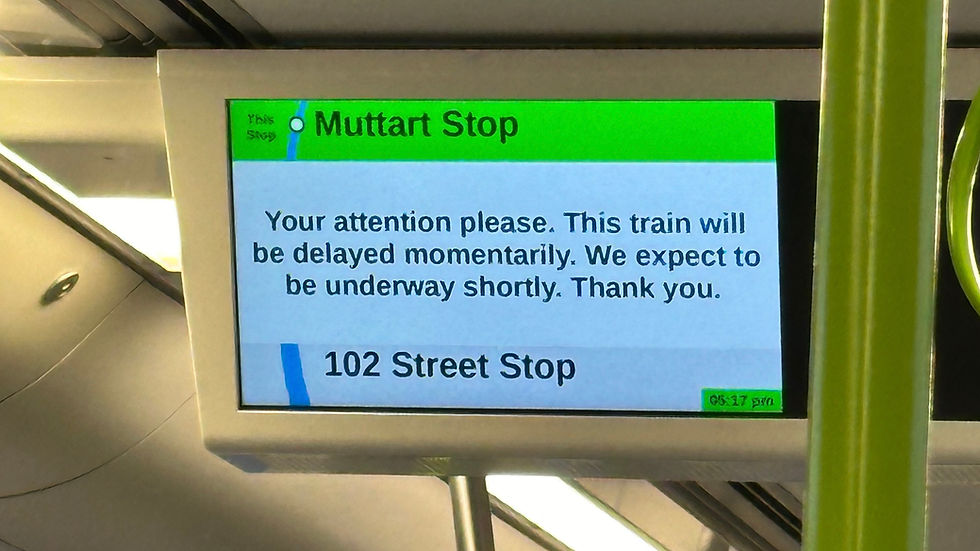
In the last five days alone, the Valley Line has experienced a variety of issues and delays—car accidents, track switch problems, and weather-related disruptions. These events highlight an even bigger concern: the challenges of operating a system designed without adequate consideration for Edmonton’s harsh winters. It begs the question why was this style of LRT chosen for a winter city?
To be fair, the Valley Line is not a bad train. The problem lies in how it was built and managed by its operator. The line was never given a fair chance to perform at its best it wasn’t optimized to minimize failures, and its design could have benefited from better planning.
Adding to the uncertainty is the upcoming Valley Line West extension. Unlike the south portion operated by TransEd, the West extension is managed by a separate P3, Marigold. Yet, there’s no clarity on who will run it. Will it be the city, TransEd, or an entirely new operator? This confusion raises serious questions about consistency in operations, from managing stops and stations to staffing trains and ensuring maintenance.
Despite all these challenges, TransEd has shown some strengths. The company’s quick communication, timely solutions, and efforts to maintain operations deserve credit. Their maintenance teams and frontline employees are known to be approachable and committed to their work. With proper support, there’s potential for TransEd to improve its performance.
Looking ahead, the City of Edmonton and TransEd need to take critical steps to address these issues. This includes making TransEd’s documents and operational updates more accessible online, establishing clear communication channels for riders, and reworking its website to be more user-focused. Even something as simple as training 311 staff to better handle Valley Line inquiries could significantly improve the rider experience.
As for the West extension, it may make the most sense for TransEd to manage it, given the city’s existing partnership and TransEd’s operational expertise. However, this will only work if TransEd first fixes the current issues with the South portion and delivers a more reliable, well-maintained service.
Edmontonians deserve a transit system that meets their needs, especially one funded with billions in taxpayer dollars. The Valley Line still has the potential to succeed, but it’s clear there’s a lot of work to do. It’s time for the city, TransEd, and all involved to step up and deliver on their promises.
Mixed Journalism Canada
Edmonton, AB


Comments